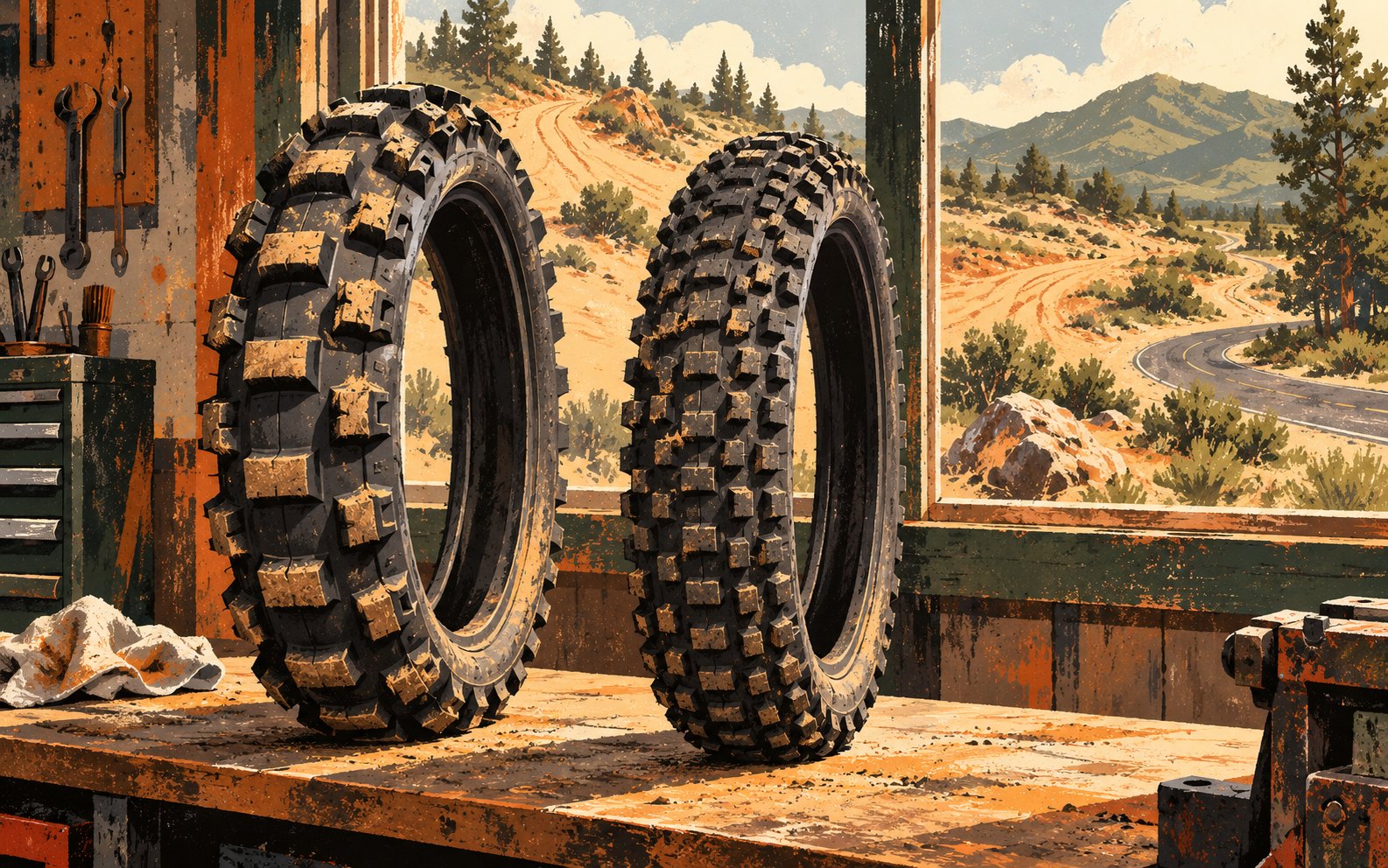
Start a tire search with a description of your riding: deep sand, changing loam, baked hardpack, rocky trails or a mix of dirt and pavement. Michelin separates motocross, enduro, trials and rally applications, while its adventure guidance emphasizes the balance between road and off-road use. That makes your regular route a more useful starting point than a race-bike photograph. [1]
Read terrain labels literally. Dunlop’s motocross guide divides its range into sand, soft-to-intermediate, intermediate-to-hard and hard-ground applications. These describe the intended surface; they are not a universal ranking from beginner to expert. For a route with several surfaces, look at the manufacturer’s stated operating range and decide which conditions matter most, rather than assuming the most specialized tread is the most versatile. [2]
Road use is a separate check
Check road approval separately. Michelin’s U.S. off-road catalog includes both tires identified as not street legal and others approved for highway use. An enduro-style appearance does not establish road suitability. If your ride includes public-road connections, verify the exact model, size and road-use approval for the country where you will ride with the manufacturer and your installer before buying. [3]
Next, confirm the complete specification for your motorcycle and wheels. Width, aspect ratio and rim diameter are only part of the description: construction, front or rear application, load and speed ratings, and tube requirements also matter. Michelin distinguishes TT, TL and dual-marked tires; a tire carrying a tubeless marking does not turn a tube-type rim into a tubeless wheel. Have any proposed departure from the approved fitment checked professionally. [4] [5] [6]
Finally, plan how you will maintain the setup. Use the applicable cold-pressure guidance for the motorcycle, tire and intended use, rather than borrowing one low-pressure number from another rider. Michelin’s off-road recommendations vary by product and conditions, and its trail guidance says to restore approved road pressure before returning to pavement. Write down the exact tire specification and pressure guidance before ordering, so the next replacement starts with a useful record. [7] [8]
Sources & technical information
- Michelin: matching motorcycle tires to their intended use.
- Dunlop: motocross terrain categories.
- Michelin USA: off-road tires and road-use designations.
- Michelin: reading motorcycle tire markings.
- Michelin: motorcycle tire FAQ and TT/TL compatibility.
- Michelin: motorcycle tire speed and load ratings.
- Michelin: off-road tire pressure guidance.
- Michelin: tire maintenance and returning to road pressures.
Sources checked Oct 22, 2026 (UTC). Fitment, specifications and procedures vary; confirm the current manufacturer instructions for your exact bike and component.